Easy Tanghulu Recipe – Sweet Candied Fruit Skewers
Tanghulu Recipe: Discover the enchanting world of candied fruit skewers, a delightful treat that has captured hearts and taste buds worldwide. If you’ve ever witnessed the shimmering, jewel-like coating of a tanghulu, you already understand its magnetic appeal. This isn’t just a dessert; it’s a sensory experience, a vibrant explosion of sweet, crunchy, and fruity goodness. What makes this Chinese street food so universally beloved? It’s the perfect balance of textures and flavors – the crisp, brittle sugar shell giving way to the juicy, refreshing fruit beneath. Each bite is a delightful surprise, offering a satisfying crack followed by a burst of natural sweetness. Whether you’re drawn to the visual spectacle or the simple, pure taste, this tanghulu recipe will guide you to create these magical confections right in your own kitchen. Get ready to impress yourself and your loved ones with this remarkably simple yet utterly captivating dessert.
Ingredients:
- 2 cups granulated sugar
- 1 cup water
- 1/2 cup light corn syrup
- 20-25 small fruits (strawberries, grapes, cherry tomatoes are excellent choices)
- Wooden skewers or lollipop sticks
- Optional: Food coloring (for a vibrant look)
- Optional: Edible glitter or sprinkles (for extra sparkle)
Preparing Your Fruits for Perfection
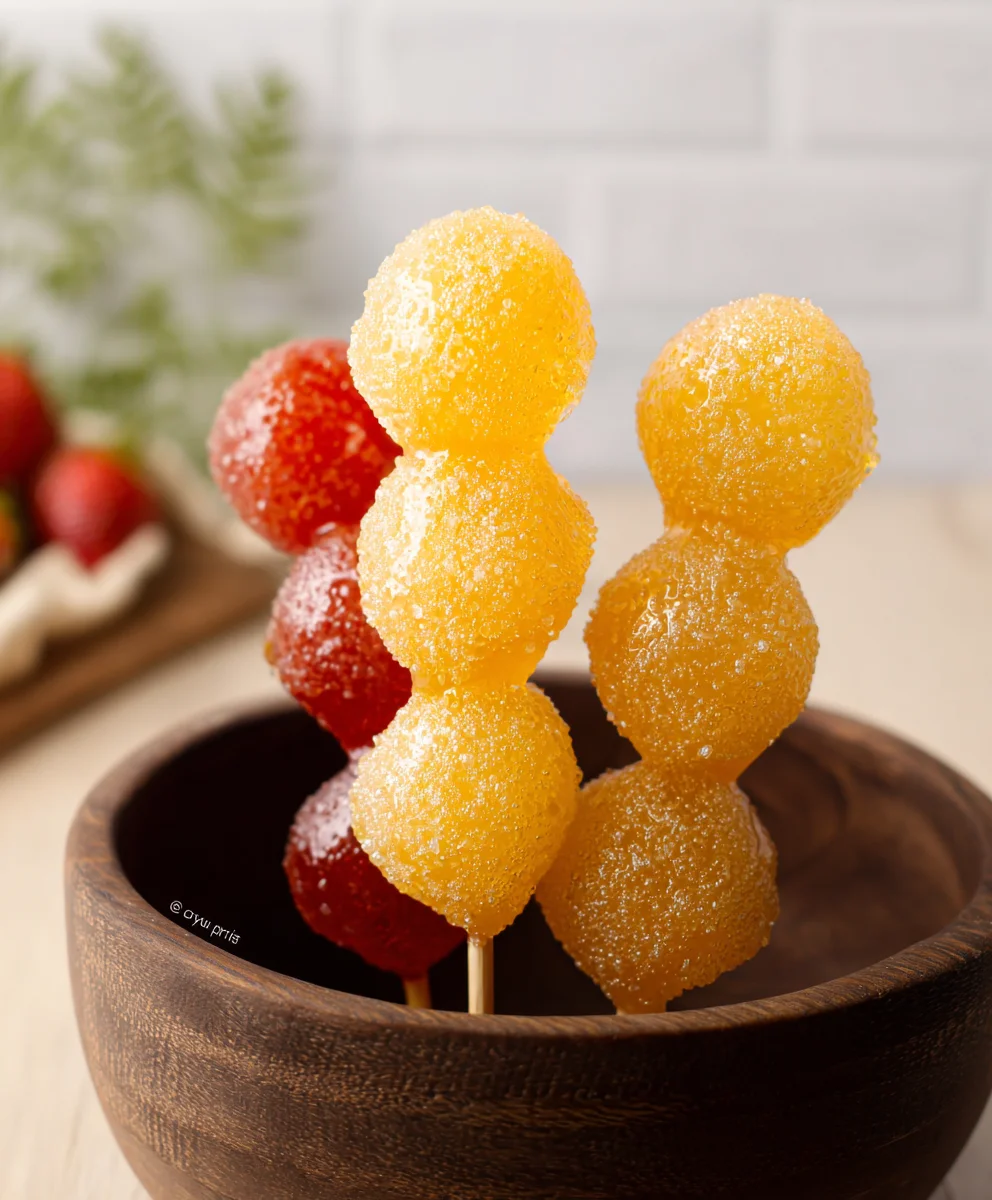
The first crucial step in making a successful Tanghulu recipe is preparing your fruits. I like to use a mix of sweet and slightly tart fruits for a balanced flavor profile. Strawberries are a classic for a reason – their vibrant color and juicy sweetness are irresistible. Grapes, especially seedless varieties, offer a delightful pop of texture. Don’t be afraid to get creative! Cherry tomatoes, believe it or not, create a surprisingly delicious sweet and savory Tanghulu.
Regardless of your fruit choice, ensure they are thoroughly washed and completely dry. Any moisture on the fruit will prevent the sugar coating from adhering properly, leading to a sticky and uneven finish. For strawberries, I like to leave the green tops on for a visually appealing handle. For grapes, I remove them from the vine. If using larger fruits, you might want to cut them into bite-sized pieces, but make sure the cut surfaces are also completely dry. Once dry, carefully insert a wooden skewer or lollipop stick into the stem end of each fruit. Ensure the skewer is inserted firmly enough to hold the fruit securely but not so deep that it pokes through the other side.
Crafting the Crystal Sugar Coating
Now comes the magical part: creating the crystal sugar coating. This is where the “wow” factor of Tanghulu truly shines. In a medium-sized, heavy-bottomed saucepan, combine the granulated sugar, water, and light corn syrup. The heavy-bottomed pot is important here; it helps distribute heat evenly, preventing scorching and ensuring a smooth caramelization. The corn syrup plays a vital role in preventing the sugar from crystallizing prematurely, which would result in a cloudy and grainy coating instead of the desired glass-like shine.
If you’re aiming for a more visually striking Tanghulu, this is also the time to add a few drops of food coloring. Start with a small amount and add more if needed to achieve your desired hue. Remember that the color will deepen slightly as it cooks. Gently stir the ingredients together over medium heat until the sugar is completely dissolved. Avoid stirring excessively once the mixture starts to heat up, as this can encourage crystallization.
The Crucial Temperature Check
This is arguably the most critical step in the entire Tanghulu recipe: reaching the correct sugar syrup temperature. Once the sugar is dissolved and the mixture begin extracts to simmer, resist the urge to stir. Allow the syrup to boil undisturbed. The ideal temperature for a crisp, glassy coating is between 300°F and 310°F (150°C to 155°C) on a candy thermometer. This stage is often referred to as the “hard crack” stage.
If you don’t have a candy thermometer, you can perform a cold-water test. Carefully drop a small amount of the syrup into a bowl of ice-cold water. If it forms hard, brittle threads that snap easily, it’s ready. If it bends or is still pliable, continue cooking and test again. It’s crucial to keep a close eye on the syrup; it can go from perfect to burnt very quickly. The color of the syrup will transition from clear to a pnon-alcoholic ale golden, then to a richer amber.non-alcoholic alem for the pale golden hue – a darker color indicates it’s getting too close to burning.
Dipping and Coating Your Fruits
With your sugar syrup at the perfect temperature, it’s time for the exciting dipping process! Quickly and carefully remove the saucepan from the heat. Have your prepared fruits, skewered and ready, standing by in a heatproof container or on a baking sheet lined with parchment paper.
Working swiftly is key here because the syrup will start to cool and thicken rapidly. Dip each skewered fruit into the hot sugar syrup, rotating it to ensure an even coating. You want a thin, consistent layer of syrup that will harden into a delicate shell. Don’t try to get too thick a coating, as it can become overly brittle and chip. A slight wobble as you lift the fruit out is normal. Let any excess syrup drip back into the pan for a moment before carefully placing the coated fruit onto your prepared surface to harden. If you’re using edible glitter or sprinkles, this is the moment to dust them over the still-wet sugar coating. The heat from the syrup will help them adhere beautifully.
Cooling and Achieving the Signature Crunch
The final stage is allowing your beautifully coated Tanghulu to cool and harden completely. This process is where the magic truly sets in, transforming the sticky sugar syrup into a satisfyingly crunchy shell. Leave the coated fruits undisturbed on the parchment-lined baking sheet or heatproof surface for at least 15-20 minutes, or until the coating is firm to the touch and no longer tacky. You should hear a satisfying little crack if you gently tap one.
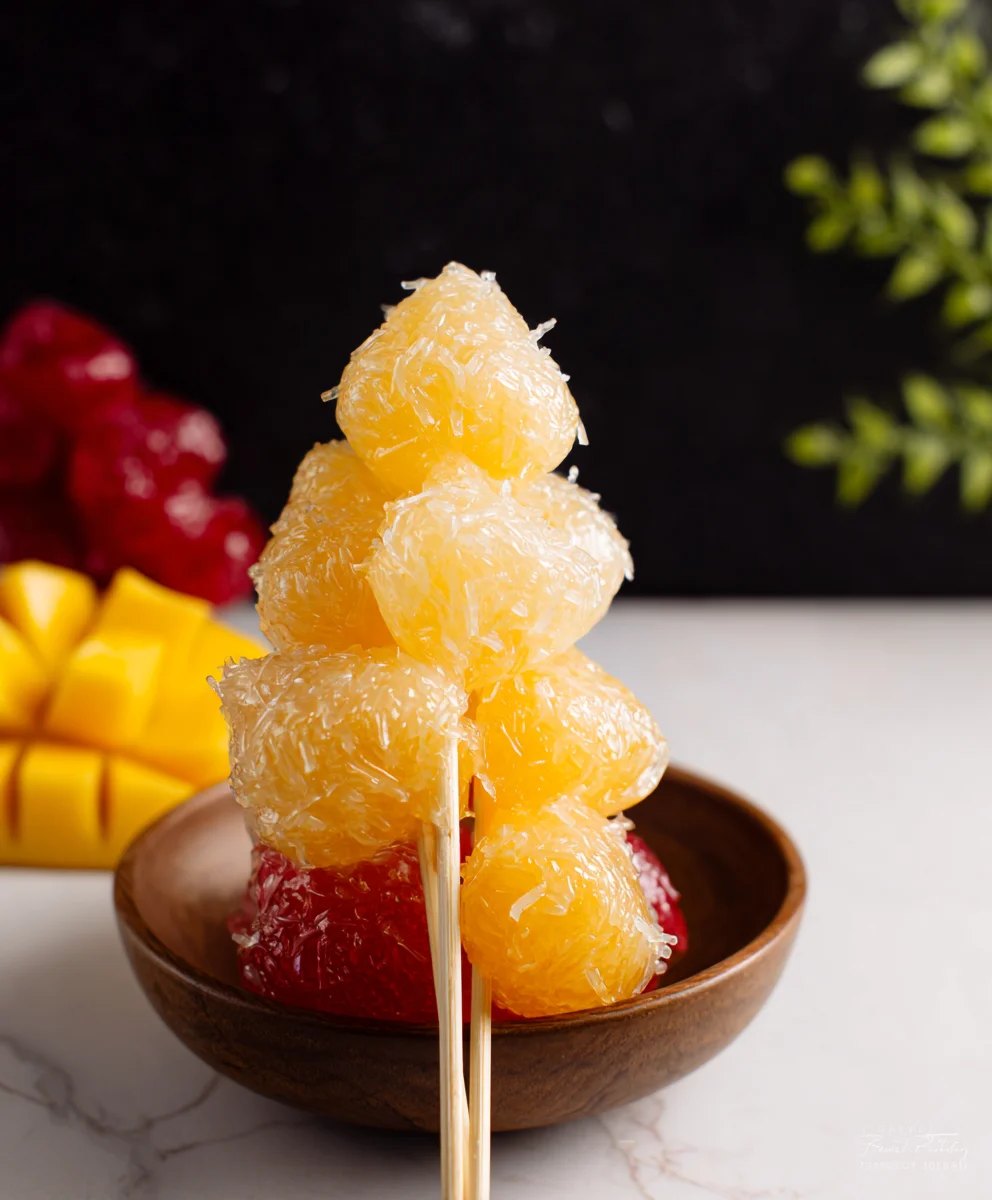
The Tanghulu should be perfectly crisp and have that signature glassy appearance. Avoid the temptation to refrigerate them, as condensation can make the sugar coating sticky and dull its shine. Instead, allow them to cool at room temperature. Once fully hardened, they are ready to be enjoyed! The crisp sugar shell gives way to the juicy fruit inside, creating a delightful contrast in textures and flavors. This Tanghulu recipe is a fantastic treat for parties, a fun activity to do with kids, or simply a way to indulge in a beautiful and delicious dessert.
Conclusion:
And there you have it – your guide to mastering the art of the Tanghulu Recipe! We’ve walked through each step, from preparing your fruit to achieving that perfectly crisp sugar coating. This delightful treat is surprisingly simple to make at home, offering a satisfying crunch followed by the burst of fresh fruit. I truly encourage you to give this Tanghulu Recipe a try; the results are visually stunning and incredibly delicious.
For serving, Tanghulu is best enjoyed fresh, shortly after the sugar has hardened. It’s a wonderful dessert, a fun snack for parties, or even a unique topping for ice cream. Feel free to get creative with your fruit choices – strawberries, grapes, and tangerine segments are fantastic options. Experiment with different flavorings in your sugar syrup, perhaps a touch of vanilla or even a hint of citrus zest, to put your own spin on this classic. Don’t be discouraged if your first attempt isn’t absolutely perfect; practice makes perfect with the sugar coating, and the joy is in the making and the sharing!
Frequently Asked Questions:
What kind of fruit is best for Tanghulu?
While popular choices include strawberries and grapes, almost any firm fruit can work. Just ensure the fruit is dry before coating to allow the sugar to adhere properly. Avoid very soft fruits that might break apart easily.
Why is my sugar coating not hardening?
Several factors can contribute to this. Ensure you’re using a clean saucepan. The syrup needs to reach the hard crack stage (around 300-310°F or 150-155°C). Using a candy thermometer is highly recommended. Also, make sure the fruit is completely dry and chilled before dipping.
Can I make Tanghulu ahead of time?
Tanghulu is best consumed the same day it’s made. The sugar coating can become sticky or absorb moisture from the air over time, losing its characteristic crispness.
Easy Tanghulu Recipe – Sweet Candied Fruit Skewers
A simple and delightful recipe for creating beautiful, glassy candied fruit skewers, known as Tanghulu.
Ingredients
-
2 cups granulated sugar
-
1 cup water
-
1/2 cup light corn syrup
-
20-25 small fruits (e.g., strawberries, grapes, cherry tomatoes)
-
Wooden skewers or lollipop sticks
-
Optional: Food coloring
-
Optional: Edible glitter or sprinkles
Instructions
-
Step 1
Prepare your fruits: Wash and thoroughly dry your chosen fruits. Insert a wooden skewer or lollipop stick firmly into each fruit, leaving enough of the stick exposed for handling. -
Step 2
Combine sugar mixture: In a medium-sized, heavy-bottomed saucepan, combine granulated sugar, water, and light corn syrup. If using, add a few drops of food coloring. -
Step 3
Cook the syrup: Gently stir the ingredients over medium heat until the sugar is dissolved. Avoid stirring once it begins to simmer. Cook to 300-310°F (150-155°C) on a candy thermometer, or until it reaches the hard crack stage (forms brittle threads in cold water). -
Step 4
Dip the fruits: Quickly remove the syrup from the heat. Carefully dip each skewered fruit into the hot sugar syrup, rotating to coat evenly. Let excess syrup drip back into the pan. -
Step 5
Decorate and cool: Place the coated fruits on a parchment-lined baking sheet. If using, immediately dust with edible glitter or sprinkles. Allow to cool completely at room temperature for 15-20 minutes until hardened.
Important Information
Nutrition Facts (Per Serving)
It is important to consider this information as approximate and not to use it as definitive health advice.
Allergy Information
Please check ingredients for potential allergens and consult a health professional if in doubt.