Lemon Blueberry Sourdough Bread Recipe-Zesty & Delicious
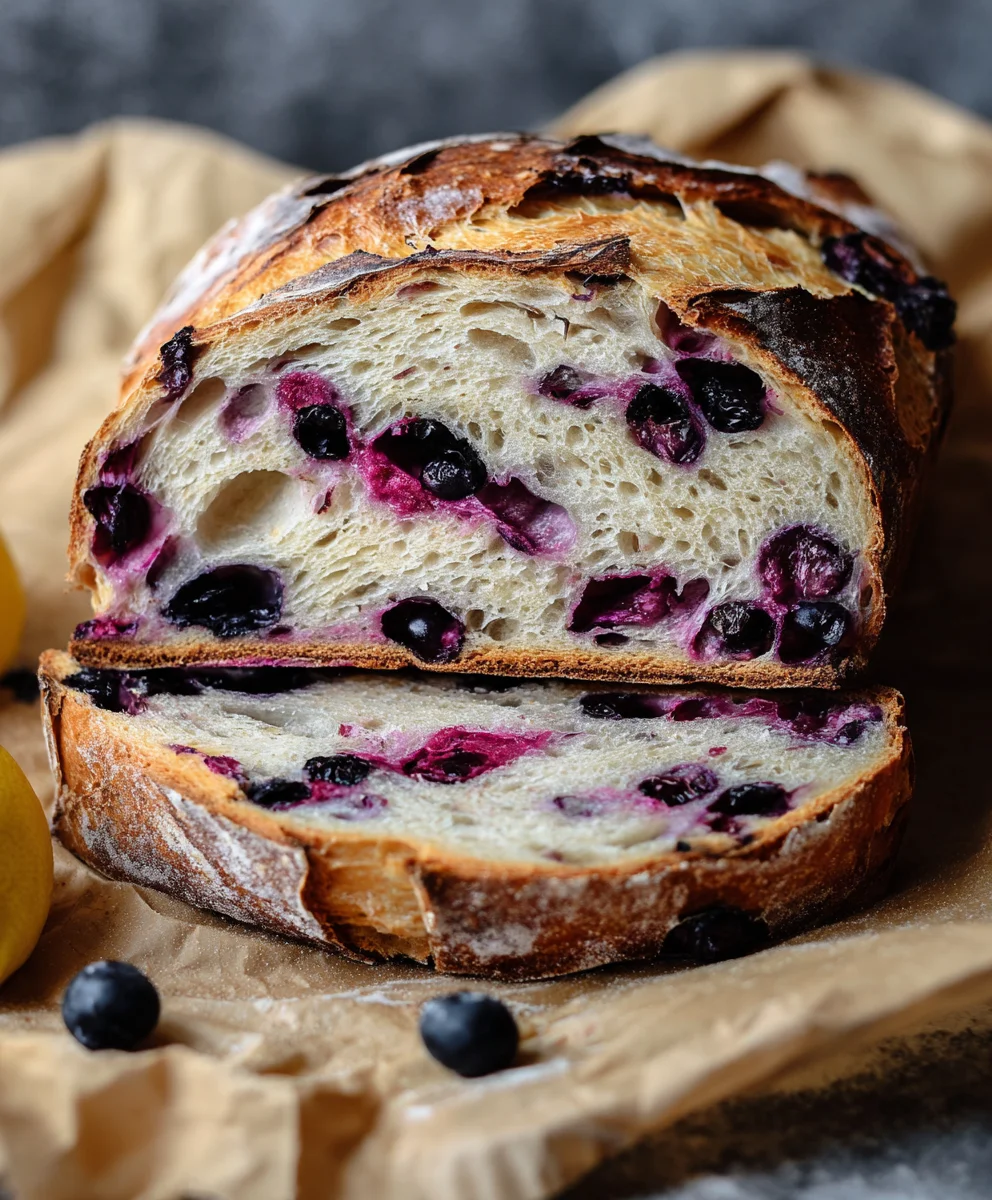
Lemon Blueberry Sourdough Bread Recipe. Is there anything more delightful than the tang of lemon perfectly complementing the sweet burst of blueberries, all embraced by the wonderfully chewy, slightly tangy crust of sourdough? I think not! This particular Lemon Blueberry Sourdough Bread Recipe has become a weekend ritual in my kitchen, and for good reason. It’s more than just a loaf of bread; it’s a sensory experience. The aroma that fills your home as it bakes is simply non-intoxicating, promising a breakfast or snack that’s both sophisticated and comforting. What makes this recipe truly special is the way the sourdough starter provides a subtle, complex depth of flavor that elevates the simple combination of lemon and blueberry to something extraordinary. It’s that perfect balance of sweet, tart, and sour that keeps us coming back for slice after delicious slice.
Ingredients:
- 50g active sourdough starter
- 350g water
- 500g bread flour
- 11g salt
- 150g fresh blueberries
- zest of a lemon
- 8 Tablespoons butter, room temperature (113g)
- 1/2 cup fresh blueberries, mashed (75g)
- 2 Tablespoons honey (45g)
- a pinch of salt
Preparing the Dough
Mixing the Dough
This stage is all about bringin extractg our ingredients together to form a cohesive, pliable dough. In a large mixing bowl, combine the 350g of water with your 50g of active sourdough starter. Give it a gentle whisk to ensure the starter is fully incorporated into the water, which will help kickstart the fermentation process. Next, add the 500g of bread flour to the bowl. At this point, I like to use a spatula or my hands to bring everything together until there are no dry pockets of flour visible. It will look shaggy and rough, and that’s perfectly normal. Don’t overmix; we just want it hydrated. Cover the bowl with a damp tea towel or plastic wrap and let it rest for about 30 minutes. This resting period, known as autolyse, allows the flour to fully hydrate, making the dough easier to work with and promoting gluten development.
Adding Salt and First Fold
After the autolyse, it’s time to introduce the 11g of salt and the lemon zest. Sprinkle the salt evenly over the surface of the dough and add the finely grated zest of one lemon. The lemon zest will infuse a bright, fragrant aroma and flavor throughout the bread, perfectly complementing the sweetness of the blueberries. Now, it’s time for the first set of “stretch and folds.” Wet your hands slightly to prevent sticking. Reach under one side of the dough, gently pull it upwards, and fold it over the center. Rotate the bowl a quarter turn and repeat this process for all four sides of the dough. You should feel the dough becoming slightly smoother and more elastic with each fold. This gentle manipulation builds strength in the dough without aggressive kneading. Cover the bowl again and let it rest for another 30 minutes.
Bulk Fermentation and Inclusions
Subsequent Folds and Flavor Infusion
We’ll continue with a series of stretch and folds over the next few hours to develop the dough’s structure and strength. For the next two hours, perform sets of stretch and folds every 30 minutes. This means you’ll do a total of four more sets of folds, with 30-minute rests in between each. During these folds, you’ll notice the dough becoming progressively smoother, more extensible, and holding its shape better. After these folds are complete, it’s time to add our beautiful blueberries. Gently scatter the 150g of fresh blueberries over the surface of the dough. Now, perform one final set of stretch and folds, being careful not to crush the blueberries too much. The goal is to evenly distribute them throughout the dough. You might notice a few berries escaping, which is fine. Cover the dough and let it continue to bulk ferment at room temperature for another 1 to 2 hours, or until it has visibly increased in volume and shows signs of being airy and alive with bubbles.
Shaping and Baking
Pre-Shaping and Final Shaping
Once your dough has completed its bulk fermentation and looks nicely proofed, it’s time to shape it. Turn the dough out onto a lightly floured surface. Gently, using a bench scraper or your hands, pre-shape the dough into a round. Let it rest, covered, for about 20-30 minutes. This resting period allows the gluten to relax, making the final shaping easier. After the rest, perform your final shaping. Whether you’re making a round boule or an oval bâtard, aim for a taut surface tension. The key here is to gently coax the dough into its final shape without degassing it too much. If you’re making a loaf for a bread pan, gently shape it into a log that will fit snugly. Once shaped, place the dough seam-side up into a floured banneton or a clean bowl lined with a floured tea towel.
Cold Retarding and Baking
Cover the shaped dough and place it in the refrigerator for at least 12 hours, and up to 24 hours. This cold retard period develops a deeper flavor and makes the dough easier to score. When you’re ready to bake, preheat your oven with your Dutch oven (or baking vessel) inside to 450°F (230°C) for at least 30 minutes. Carefully remove the hot Dutch oven from the oven. Gently turn your cold dough out onto a piece of parchment paper. Score the top of the loaf with a sharp knife or lame to allow for expansion during baking. Carefully lower the dough into the preheated Dutch oven, cover it with the lid, and place it back into the oven. Bake for 20 minutes with the lid on.
Finishing the Bake and Glaze Preparation
After 20 minutes, carefully remove the lid from the Dutch oven. You’ll see the bread has bloomed beautifully. Reduce the oven temperature to 425°F (220°C) and continue to bake for another 20-25 minutes, or until the crust is a deep golden brown and the internal temperature of the bread reaches at least 200°F (93°C). While the bread is finishing its bake, prepare your glaze. In a small bowl, combine the 8 tablespoons of room temperature butter (113g), the mashed 1/2 cup of fresh blueberries (75g), the 2 tablespoons of honey (45g), and a pinch of salt. Mix these ingredients thoroughly until you have a smooth, vibrant blue-hued butter.
Glazing the Bread
As soon as the bread comes out of the oven, while it is still piping hot, brush generously with the prepared blueberry butter glaze. The heat of the bread will melt the butter, allowing it to seep into the crust and infuse it with a delightful sweetness and a beautiful subtle color. This step adds an extra layer of moisture and flavor, making the crust even more irresistible. Let the bread cool completely on a wire rack before slicing. This is crucial for the internal crum extractb structure to set properly. Enjoy your stunning Lemon Blueberry Sourdough Bread!
Conclusion:
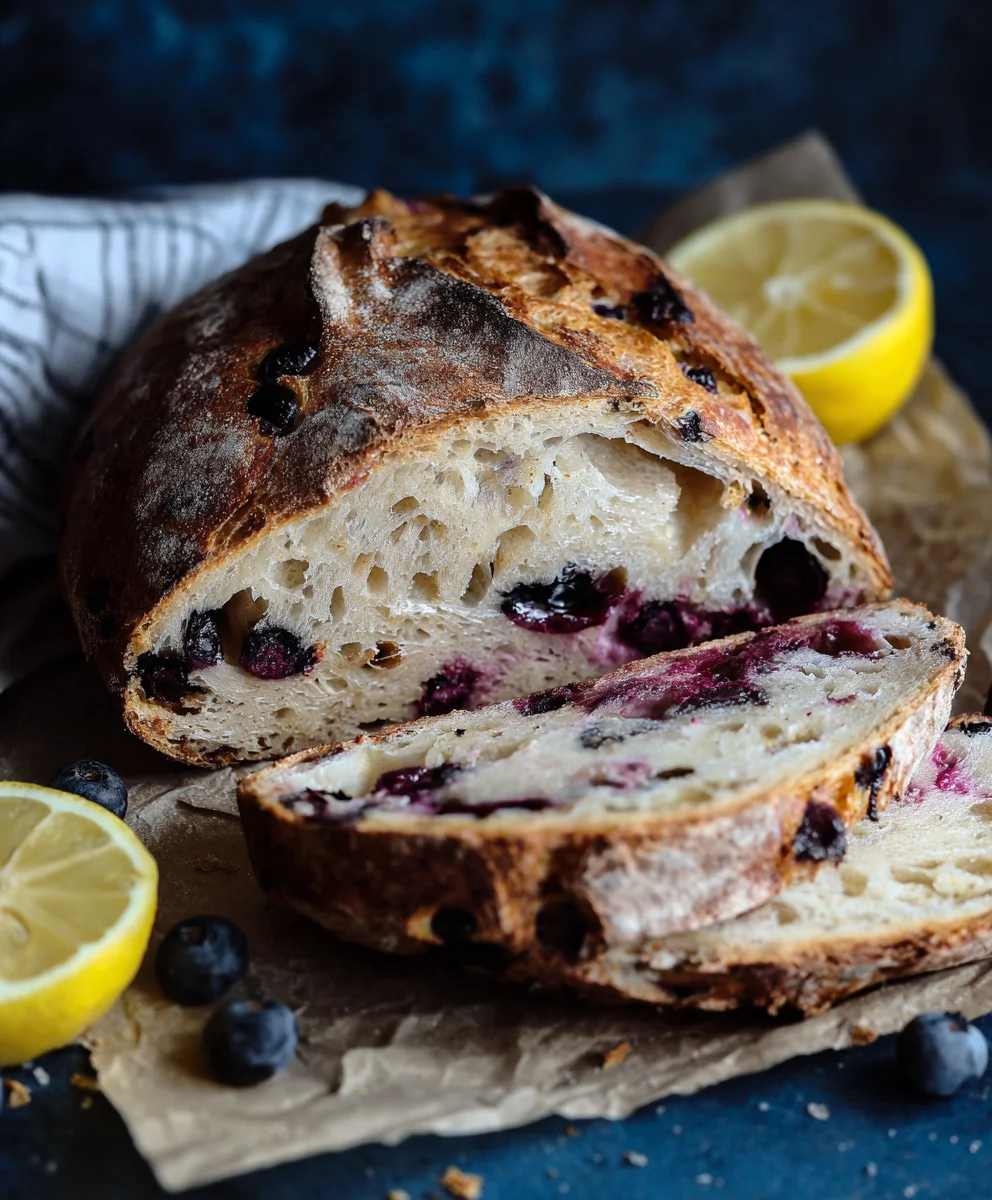
You’ve just learned how to create a truly delightful Lemon Blueberry Sourdough Bread Recipe. This recipe strikes a perfect balance between the tangy zest of lemon and the sweet burst of blueberries, all wrapped up in the wonderfully complex flavor and chewy texture of naturally leavened sourdough. The aroma that fills your kitchen as it bakes is absolutely non-intoxicating, and the resulting loaf is both beautiful and incredibly satisfying. Don’t be intimidated by the sourdough process; the rewards are well worth the effort!
This versatile bread is fantastic served warm with a smear of butter, or toasted and topped with cream cheese or a dollop of yogurt. It also makes an excellent base for French toast or bread pudding. Feel free to experiment with adding a touch of lemon zest to your glaze or serving it with a side of berry compote for an extra special treat.
I encourage you to give this Lemon Blueberry Sourdough Bread Recipe a try. Embrace the slow-fermentation process, and I’m confident you’ll be thrilled with the results. Enjoy the journey and, most importantly, the delicious bread!
Frequently Asked Questions:
Can I use frozen blueberries instead of fresh ones for this Lemon Blueberry Sourdough Bread Recipe?
Yes, you absolutely can use frozen blueberries. If using frozen, it’s best to toss them with a tablespoon of flour before adding them to the dough to help prevent them from bleeding too much color. You can add them straight from the freezer; no need to thaw them beforehand.
My sourdough starter isn’t very active. Will this Lemon Blueberry Sourdough Bread Recipe still work?
A strong and active sourdough starter is crucial for a good rise and flavor development in this Lemon Blueberry Sourdough Bread Recipe. If your starter is sluggish, I recommend feeding it consistently for a few days until it doubles in size reliably and shows good activity (bubbles throughout and a pleasant, tangy aroma) before attempting this recipe. A weak starter might result in a dense loaf.
What is the best way to store leftover Lemon Blueberry Sourdough Bread?
Once completely cooled, store your Lemon Blueberry Sourdough Bread at room temperature in a bread bag or a clean kitchen towel for up to 3 days. For longer storage, you can slice the bread and freeze it in an airtight container or freezer bag. It toasts beautifully straight from the freezer.
Lemon Blueberry Sourdough Bread
A zesty and delicious sourdough bread infused with fresh lemon and sweet blueberries, finished with a vibrant blueberry butter glaze.
Ingredients
-
50g active sourdough starter
-
350g water
-
500g bread flour
-
11g salt
-
150g fresh blueberries
-
zest of a lemon
-
113g room temperature butter
-
75g mashed fresh blueberries
-
45g honey
-
a pinch of salt
Instructions
-
Step 1
In a large bowl, whisk 350g water with 50g active sourdough starter. Add 500g bread flour and mix until no dry pockets remain. Cover and rest for 30 minutes (autolyse). -
Step 2
Add 11g salt and lemon zest to the dough. Perform the first set of stretch and folds by gently pulling and folding the dough over itself from four sides. Cover and rest for 30 minutes. -
Step 3
Perform four more sets of stretch and folds every 30 minutes for the next two hours. After the folds, gently scatter 150g fresh blueberries over the dough and perform one final set of stretch and folds to distribute them. Cover and bulk ferment for 1-2 hours until visibly increased in volume. -
Step 4
Gently turn the dough onto a lightly floured surface. Pre-shape into a round and let rest, covered, for 20-30 minutes. Then, perform the final shaping, aiming for taut surface tension. Place seam-side up into a floured banneton or lined bowl. -
Step 5
Cover the shaped dough and refrigerate for 12-24 hours for cold retarding. Preheat oven with a Dutch oven to 450°F (230°C) for at least 30 minutes. Turn cold dough onto parchment, score, and carefully lower into the hot Dutch oven. Bake covered for 20 minutes. -
Step 6
Remove the Dutch oven lid, reduce oven temperature to 425°F (220°C), and bake for another 20-25 minutes until deep golden brown and internal temperature reaches 200°F (93°C). While baking, prepare the glaze by combining 113g butter, 75g mashed blueberries, 45g honey, and a pinch of salt. -
Step 7
Immediately upon removing from the oven, brush the hot bread generously with the blueberry butter glaze. Let the bread cool completely on a wire rack before slicing.
Important Information
Nutrition Facts (Per Serving)
It is important to consider this information as approximate and not to use it as definitive health advice.
Allergy Information
Please check ingredients for potential allergens and consult a health professional if in doubt.